Poster printing
Produce high-quality posters for indoor, outdoor and backlit displays.
Choose the right printing technology for each poster job
Different poster jobs require different levels of durability, material choice and production speed:
Eco-solvent printing is a practical choice for durable advertising posters, vinyl poster printing and other flexible sign graphics used indoors or outdoors.
UV-LED ink cures the moment it's printed under UV light, so posters can move straight to finishing without waiting for the ink to dry.
Water-based pigment ink technology for high-volume poster paper production. This technology is used for handling whiteback paper, blueback paper and city-light, which is media used in displays.


Adapt materials and sizes to each poster job
Digital printing makes it practical to switch between standard and custom sizes, update art prints and produce short campaign runs.
Depending on the printer and ink configuration, businesses can work with poster paper, photo paper, coated paper, vinyl, backlit film and many more. The material and its quality should match the display environment, required finish, viewing distance and expected durability. When working with unfamiliar media it should be tested before production.
Keep detail and colour consistent at full size
Posters often combine fine text, photographs, smooth gradients and solid colours in one design. Printing with high resolution output helps preserve fine text, photographic detail and smooth gradients at full size.
Using the correct media profile, ink settings and regular nozzle checks are essential for having sharp detail, accurate colour and solid fills. Doing regular maintenance before a full production run also helps prevent banding, colour shifts, nozzle loss. This results in a reduction of media waste.

See high-volume poster printing in production
Discover how the Tiger600-1800TS supports fast, high-volume poster production with AP50 water-based pigment ink up to 1.8 m. The system delivers clear image quality and instant drying on compatible media such as photo paper, white-back paper, blue-back paper, city-light media and more.
Poster printing applications
Produce campaign posters, point-of-sale graphics, event promotions and cinema advertising in standard or personalised posters.
Digital production can make custom poster printing practical for: short runs, regional artwork changes, personalisation and time-sensitive promotions. The sections below show some of the main applications you can produce with poster printing.
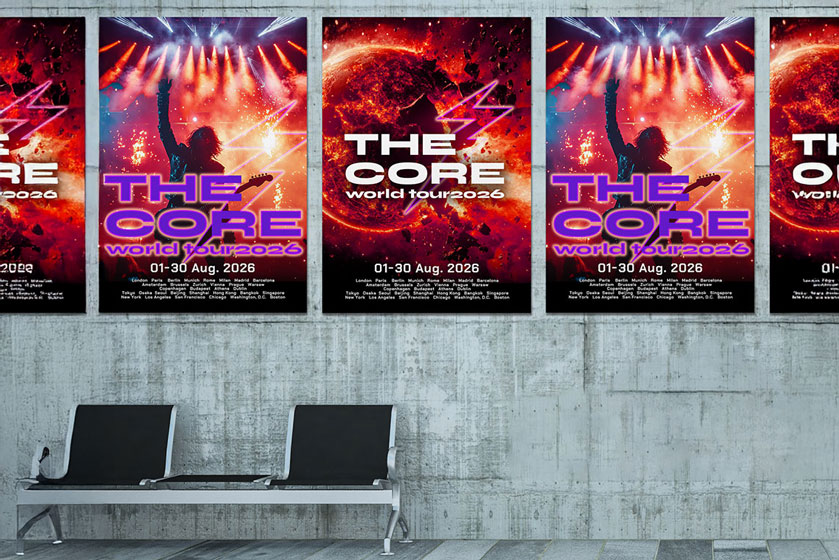
Retail and promotional posters
Produce campaign posters, point-of-sale graphics, event promotions and cinema advertising in standard or personalised posters.
Digital production can make custom poster printing practical for: short runs, regional artwork changes, personalisation and time-sensitive promotions. The sections below show some of the main applications you can produce with poster printing.
Photo, art and decorative wall posters
Create photo prints, art reproductions and decorative wall posters for shops, offices, hospitality spaces and exhibitions.
These applications prioritise fine detail, smooth gradients and accurate colour, especially when posters will be viewed closely or displayed in frames.


Backlit and outdoor display posters
Produce graphics for lightboxes, outdoor advertising panels and other demanding display environments.
Backlit posters need consistent ink density for an even appearance when lit from behind. Outdoor posters need the right ink and media to withstand weather, sunlight and handling.
Find the right Mimaki poster printer
Mimaki supports professional poster printing with eco-solvent, UV-LED and water-based pigment technologies.Versatile large format printers suit print service providers (PSP's) producing posters alongside other sign and graphics applications, while the Tiger600-1800TS with AP50 ink is designed for high-volume production on poster paper, photo paper, blue-back paper and city-light media.Explore the Mimaki printers below to compare the available technologies, print widths and production capabilities.
-
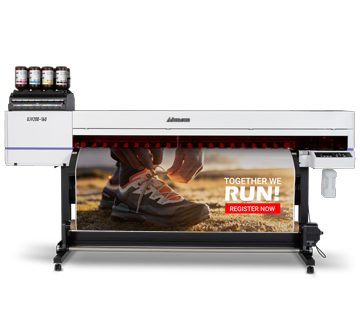
UJV200 Series
High-quality, affordable roll-to-roll UV-LED
- Speeds up to 25m²/h for fast turnaround
- Easy operation with a single printhead and automatic adjustments
- Built-in reliability with nozzle control and ink-saving technology
- Instant drying with our proven UV-LED technology

-
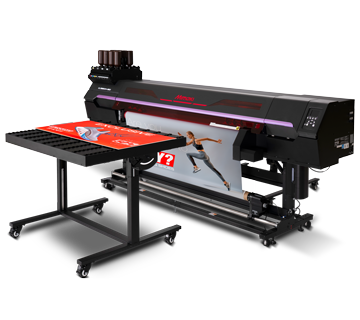
UJ330H-160
Hybrid UV printer for rigid, roll and textured printing
- Handles both roll media and rigid boards
- 2.5D textured prints, multi-layer effects and spot varnish
- Multi-board printing and automatic media alignment
- Stable media transport for the most challenging substrates
-
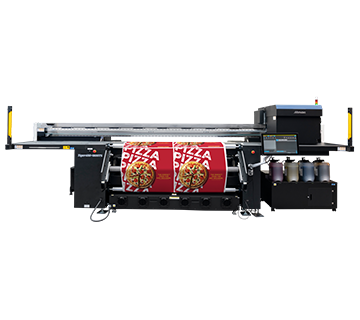
Tiger600-1800TS for Poster Printing
Industrial-scale water-based pigment printer for posters
- For photo paper, blue-back paper, city-light and poster media
- High volume production with speeds up to 220 m²/h
- Eco-friendly AP50 water-based pigment ink
- Rich colours for indoor & outdoor signage
-
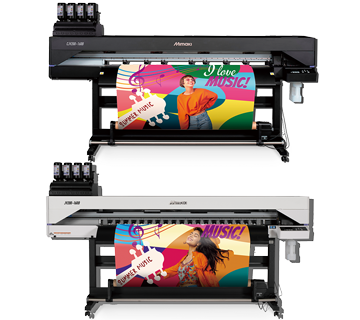
(C)JV200-160B
Eco-solvent advanced print and print & cut
- Superb image quality
- Affordable 1L ink bottles
- Reliable productivity ideal for high demand
- Easy to maintain, easier to operate
-
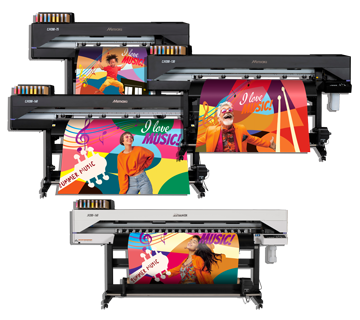
(C)JV200 Series
Eco-friendly print & cut series
- Leverages 330 Series technology for superior performance
- Three print & cut, one print-only for diverse project needs
- Eco-friendly GBL-free SS22 inks
- Easy to maintain, easier to operate
-
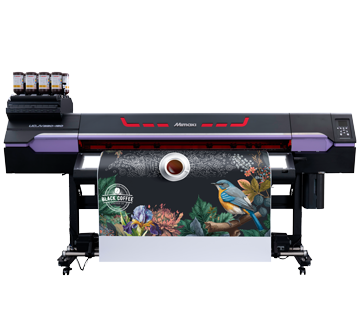
UCJV330-160
UV-LED inkjet print & cut
- Superior quality, even at high speeds
- UV-LED for multi-layer effects
- Integrated printer/cutter to expand applications
- Eco-friendly technology
-
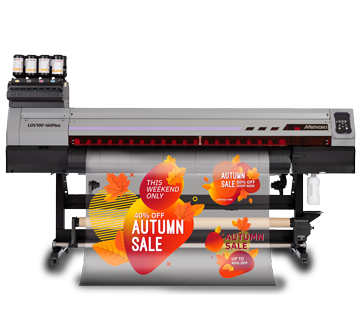
UJV100-160Plus
Low cost, high return UV-LED printer
- Pull-back printing expands applications
- Effective printer management
- Sustainable and eco-friendly technology
- More flexible cutting with CG-AR
-
(C)JV330-160
CJV330-160 Print & Cut & JV330-160 Print-only
- XY slitter, inline sheet-fed cutting to reduce post-processing
- Media changer which can hold up to three rolls of media
- Higher image sharpness and more uniform density
- Space saving system that can hold three rolls of media
-
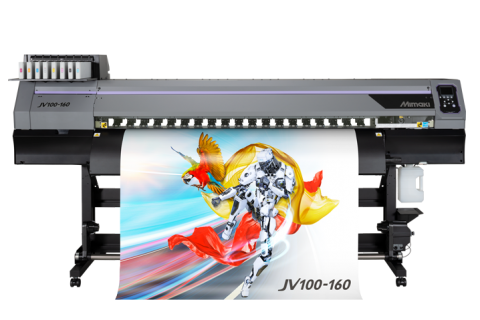
JV100-160
Low cost, high return solvent printer
- DAS system: both bi-directional and media feed adjustment
- Rasterlink7, user friendly, with variable data printing.
- Combine with Mimaki cutter for seamless workflow integration
- Fast-drying inks known for excellent weatherability and rub-fastness
-
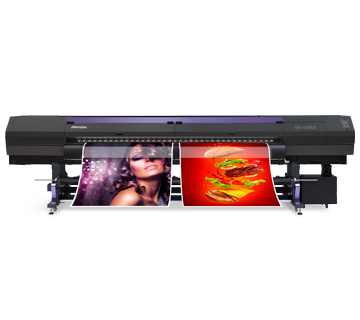
SWJ-320EA
Grand format twin-roll solvent inkjet printer
- High speed printing up to 137sqm/h
- 3.2 metre wide twin-roll printer up to 1524mm simultaneous print
- Max resolution of 1200dpi
- Heavy media rolls up to 100kg
-
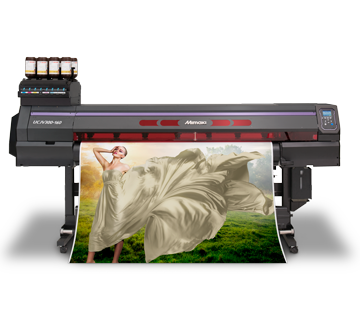
UCJV300 Series
Technologically superior UV-LED printer/cutter
- The most all-round printer with unmatched scratch resistance
- Direct finishing after printing with CMYK
- Variety of print media, even uncoated
- Environmentally friendly UV ink
-
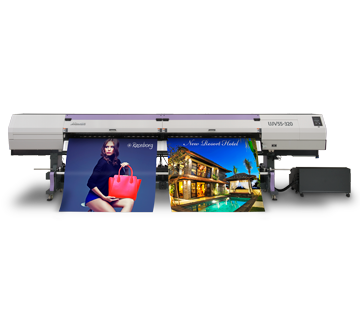
UJV55-320
High performance grand format UV-LED printer
- High density print mode for front/backlit applications
- Inline LED Lightbox for backlit print inspection
- Direct Finishing after printing
- Simultaneous twin-roll print facility


Frequently asked questions about poster printing
The best poster printer depends on the material, required width, production volume, finishing time and whether the posters will be displayed indoors or outdoors.
Eco-solvent printers suit durable flexible graphics, while UV-LED printers cure ink immediately and allow fast delivery. For high-volume paper, photo-paper, blue-back and city-light production, a dedicated water-based pigment printer may be more efficient.
Businesses producing posters alongside banners, stickers and other sign graphics may benefit from a versatile wide-format printer like eco-solvent and UV. For high-volume poster production, a water-based pigment ink printer will be the best solution, since print speed, roll capacity, colour consistency are essential for these companies.
A desktop printer can produce smaller posters or print a large design across several sheets, but this creates extra joining and finishing work. Professional poster production normally uses a wide-format inkjet printer so the design can be printed at the required size in one piece.
A dedicated poster printer also provides better control over roll media, colour profiles, repeat jobs and longer production runs. The term poster printer generally refers to a wide-format printer configured for suitable poster materials and inks.
Common poster materials include poster paper, photo paper, coated paper, blueback paper, city-light media, vinyl, backlit film and more. The right material depends on where the poster will be displayed, the required finish, viewing distance, how long it needs to last and if the poster is going to be used indoor or outdoor.
Not every material works with every ink or printer. Make sure your printer supports the media. Then use the correct colour profile and test any new material before production.
The largest one-piece poster size mainly depends on the printer’s maximum printable width. Roll-fed poster printers can produce custom lengths beyond standard sheet sizes, although the practical length also depends on the media roll, take-up system, file setup and finishing process.
If a design is wider than the printer’s printable width, it must be divided into panels or produced on a wider machine.
Poster lifespan depends on the ink, media, exposure, installation and protective finishing. As a practical guide, temporary outdoor paper posters are usually intended for campaigns lasting weeks or months, while vinyl or film printed with suitable outdoor inks can remain in use for several years. Indoor posters generally last longer when kept dry and away from direct sunlight.
For an accurate estimate, check the durability rating of the exact printer, ink, media and laminate combination. Mimaki positions, AP50 ink on paper output for indoor and short-term outdoor advertising. For longer outdoor durability, eco-solvent or UV systems can be used for multi-year weather-resistancy with or without lamination.