Digital printing on glass & acrylic
Introducing printing solutions for glass and acrylic surfaces using UV-LED inkjet printers. These are used to create vibrant, durable and scratch resistant products and are used across sign boards, photo prints, large glass panels and personalised awards and trophies.
Benefits of digital printing on glass and acrylic
Digital printing on acrylic (and glass) gives businesses the freedom to create customised, high-quality acrylic products and glass prints without the limitations of traditional printing methods.
UV-LED printing technology print designs directly onto the surface, enabling printing on glass and acrylic surfaces without the need for screens, labels, or transfer films.
White and clear inks add depth, texture and special effects to printed glass and acrylic, making them ideal for signs, decorative panels, interior décor, displays and personalised products with lasting visual impact.

UV printing solutions for glass and acrylic
A UV printer is the ideal solution for acrylic and glass printing, delivering vibrant, durable printed glass products directly onto the object without labels or transfers.
Mimaki's new ELH ink and ELS inks are free of substances of very high concern (SVHC) and free of Carcinogenic, Mutagenic, and Reprotoxic substances(CMR), for safer, more sustainable and almost odorless printing.
As glass and acrylic are non-porous materials, Mimaki's printable primer can be used to improve ink adhesion and scratch resistance.
When printing, an ionizer is also recommended to neutralise static electricity.
Glass and acrylic digital printing workflow
The workflow for glass and acrylic printing with a UV-LED inkjet printer starts with preparing of the surface to ensure optimal ink adhesion. Depending on the material, apply a specific primer, pretreat the material before printing or use a Mimaki printable primer.
The artwork is then prepared digitally and printed directly onto the glass or acrylic sheet. UV inks are instantly cured by the LED lamps, creating durable and vibrant prints with excellent detail.
After an acrylic sheet is printed, it is ready to be routed or laser-cut for applications of your choice.

Digital printing and cutting of acrylic in action
Watch Mimaki UV-LED technology print directly onto acrylic and finishing on a laser cutter to create a finished product.
Glass and acrylic printing applications
Bottles, decorative pieces, signage and large display panels each bring different production needs. Mimaki UV printing solutions support all of these applications. They help businesses expand their product range for retail, hospitality, architectural projects and promotional products.

Printing on glass bottles & cylindrical products
Mimaki UV-LED inkjet printers can work with a rotary unit like the KEBAB and the KEBAB HS. Together, they enable direct 360-degree printing on glass bottles, jars, and other cylindrical products. This digital printing solution helps businesses create custom bottle designs and branded packaging.
It also prints on glassware and promotional items. It is possible to create limited-edition products and it is an alternative to screen printed glassware.
White and clear inks enable creative effects, like opaque graphics, glossy finishes and layered design without the use of labels or transfers.
Interior décor & personalised products
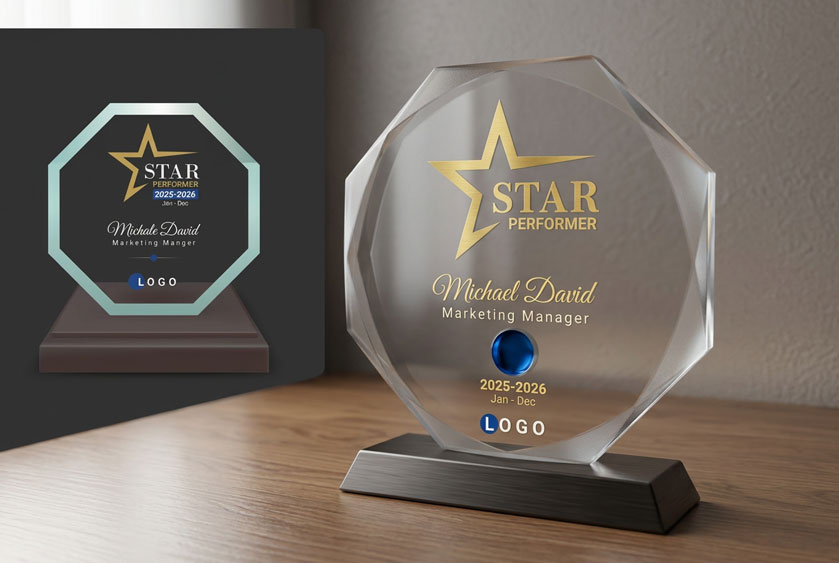
Digital printing on glass and acrylic enables you to create customised designs directly onto glass and acrylic panels with vibrant, durable results. Produce high-quality acrylic photo prints, decorative glass panels, wall décor, and personalised interior applications with exceptional detail and colour accuracy.
This technology also makes it easy to personalise awards, trophies, souvenirs, and a wide range of promotional and decorative products. They make a great fit for interior design, retail, hospitality industry and gifting markets.


Large glass graphics, signage & advertising
Produce impactful visual communication with UV printing for signage, branding and advertising. Mimaki UV-LED printers print directly on large glass panels, acrylic boards, and other rigid materials, delivering high-resolution graphics.
Examples of applications are window displays, storefronts, retail displays, office partitions, exhibition graphics and decorative panels.
Explore the Mimaki printers that support this application
Mimaki UV-LED inkjet printers can print directly on glass and acrylic. They deliver high-quality images, vibrant colours and premium finishes for many applications. With support for white and clear inks, these printers enable creative effects like layered designs, textures, matt or gloss finish.From customised photo prints and souvenirs to signage, interior décor and glass products, Mimaki printers provide the flexibility to handle diverse production needs. By using pre-print treatments, post-print finishing and new printing workflows, businesses can offer more ways to print on glass and acrylic.
-
UJ330H-160
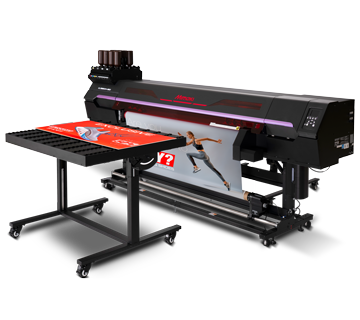
Hybrid UV printer for rigid, roll and textured printing
- Handles both roll media and rigid boards
- 2.5D textured prints, multi-layer effects and spot varnish
- Multi-board printing and automatic media alignment
- Stable media transport for the most challenging substrates

-
UJF-7151 plusII e
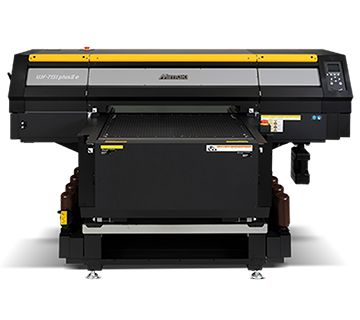
High performance flatbed UV-LED printer
- Two additional print heads
- Newly developed precise table mechanism
- Maximum print resolution of 1800dpi
- Easy integration for automated production using robotics
-
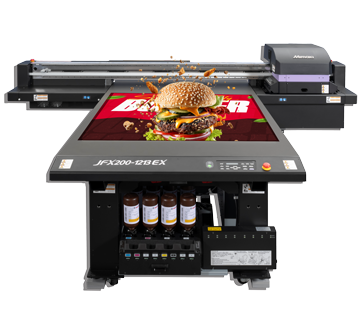
JFX200-1213 EX
Compact, high-speed UV-LED printer
- Space saving table with high print speeds
- Create 2.5D textured effects
- Bi-directional Braille printing
- Versatile media and all international A sizes
-
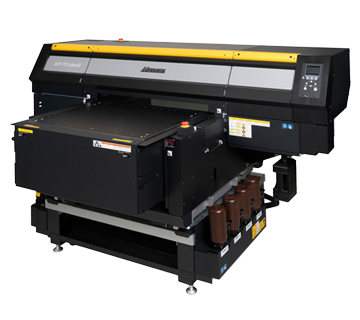
UJF-7151plus II
High performance flatbed UV-LED printer
- Two additional print heads
- Newly developed precise table mechanism
- Maximum print resolution of 1800dpi
- Easy integration for automated production using robotics
-

UJF MkII e Series
High quality small flatbed UV-LED inkjet printer
- Highest ROI thanks to superior efficiency and reliability
- Print colour and white without loss of print speed
- Easy integration for automated production using robotics
- Enhanced functions enable easier operation and less errors
-
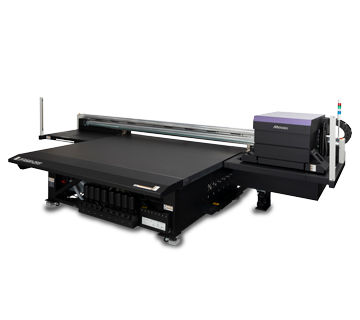
JFX600 Series
Industrial large format flatbed UV-LED printers
- Extreme productivity with print speeds of up to 200 m2/h
- 16 industrial built print heads in 4-colour or 7-colour configuration
- IoT Ready for automated, unattended production using robotics
- Mimaki Printer Controller software for easy operation
-
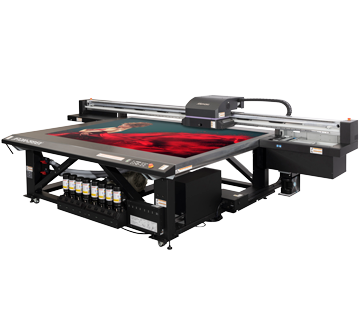
JFX200-2513 EX
5th Generation large flatbed UV-LED printer
- Introducing 2.5D automated layered printing
- Highest productivity at speeds up to 35sqm/h
- Staggered heads for printing colour and white inks simultaneously
- Added combo of NCU and NRS for uninterrupted printing
-
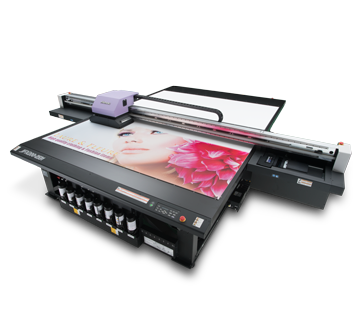
JFX200-2531
High performance large format flatbed UV-LED printers
- Highly productive print speeds
- Simultaneous high density white ink printing
- Continuous unattended printing
- Mimaki Advance Pass System reducing bandings


Frequently asked questions about printing on glass & acrylic
Yes, UV-LED inkjet printers can print directly onto glass without the need for labels or transfer materials. In most cases, a primer is recommended to improve ink adhesion and durability.
Compared to traditional screen printing on glass, digital UV printing offers greater flexibility. It enables possibilities for high-resolution graphics, vibrant colours, white ink effects and special finishes (such as matt, gloss and textured effects).
Yes. Plexiglas® is a brand name for acrylic, a transparent plastic made from polymethyl methacrylate (PMMA). While acrylic is the generic name for the material, Plexiglas® is one of the best-known brands of acrylic sheets. Other well-known acrylic brands include Acrylite®, Lucite®, Plaskolite®, Optix®, and Perspex®.
Please check beforehand if you have a cast acrylic or extruded acrylic since printability might differ.
Yes. Glass bottles and cylindrical products can be printed directly with Mimaki’s KEBAB and KEBAB HS. The detachable rotary unit enables 360-degree printing on cylindrical objects.
The use of white and clear inks expand creative possibilities, enabling opaque colours, premium effects and layered designs on transparent or coloured surfaces.
Beware that for most products a primer must be used.
Because glass is a smooth, non-porous material, UV ink may have difficulty bonding directly to the surface without proper preparation. Applying a suitable primer or pretreatment can improve ink adhesion by creating a stronger connection between the glass surface and the UV ink layer.
For example Mimaki's printable primer is designed to enhance the bonding strength of UV inks on challenging materials such as glass, helping improve scratch resistance, durability and overall print quality. The need for primer depends on the type of glass, ink used and the intended application.
Testing the combination of substrate, primer and printing conditions is recommended to achieve the best results, especially for products requiring long-lasting performance.
Before printing on glass or acrylic, the surface should be clean, dry, and free from dust, oil, or other contaminants that may affect ink adhesion. As these materials are non-porous, testing the appropriate ink, primer, and curing settings helps achieve optimal printing results.
When printing on this material, an ionizer is often recommended to neutralise static electricity. It reduces dust attraction and helps to avoid nozzle deflection, improve print consistency and image quality.