Customisation & logo printing
For uniforms, staff clothing, and other workwear made for daily use.
What matters most in workwear printing?
When you print for workwear, you need to look beyond the first result. Workwear is washed frequently and used in demanding conditions, so wash resistance and durability are key decision factors.
Consistency also matters. The same logo and brand colours need to look right across shirts, jackets, safety clothing, and repeat orders. This is important for a professional and consistent company image.
You also need to think about the type of job. Some jobs focus on adding logos, names, or other personalised details to ready-made workwear, while others may involve printing fabric before garment production. These factors help you decide what is most suitable for the application.
How personalisation changes workwear production
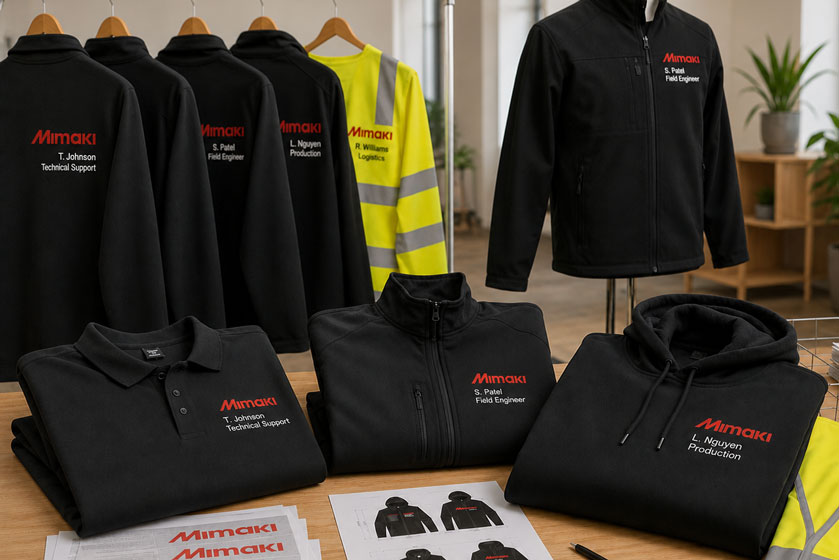
In workwear production, personalisation often means that one order no longer follows one fixed design. The order may use one shared company logo across all garments, while also adding different names, job titles, department details, or placement changes.
This makes production more demanding. You need to keep the branding consistent while handling variation accurately across the order. It also affects preparation. The design file may need multiple versions for different garments or individual details.
The goal is to produce each item correctly while keeping the whole order aligned in branding, quality, and delivery.
Workwear printing workflows
The right approach depends on the garment, the fabric, and the type of personalisation needed:
DTF transfer: often the best choice for full-colour logos, gradients, detailed designs, short runs and flexible garment personalisation.
Sublimation printing / textile production workflows: This approach has a more limited role in this application. It is mainly relevant for white polyester fabrics or for workflows where fabric is printed before sewing. Because the print becomes part of the fabric, it offers high durability.
HTV / heat-transfer vinyl: can be useful for already-made garments and workwear items such as shirts and uniforms, especially where names, numbers, logos, or simple graphics need to be applied. It is printed on heat-transfer foil, cut, and applied to fabric with a heat press, making it similar to DTF. For this method, consider the CJV200 Series, or the JV200 + CG-AR combination for a print-and-cut workflow.
Check out our (C)JV200 Series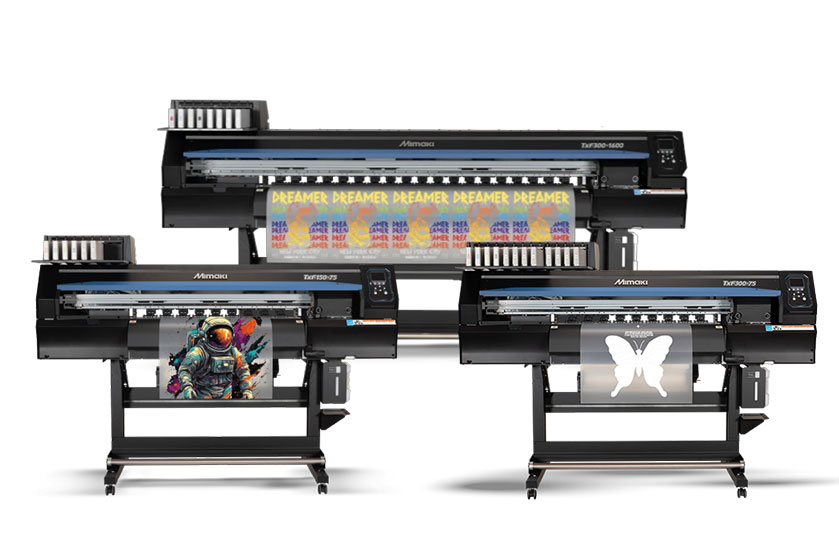
See workwear branding in production
See how a logo is printed and then applied to workwear as part of the personalisation process.
Branded uniforms
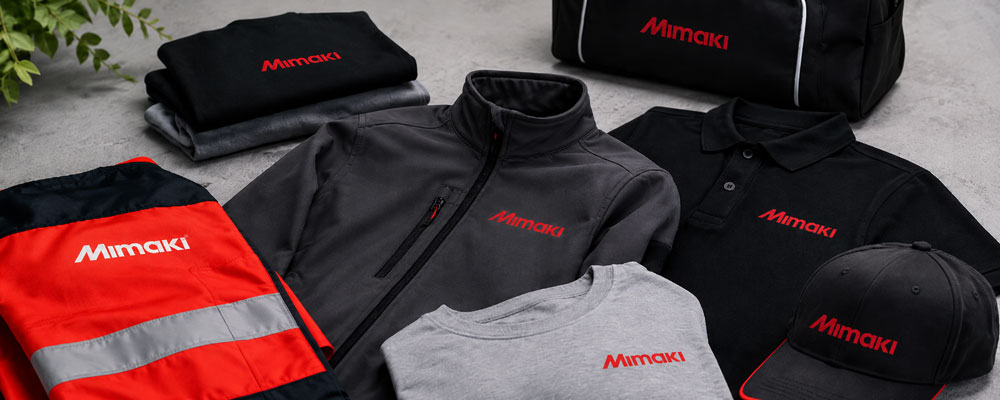
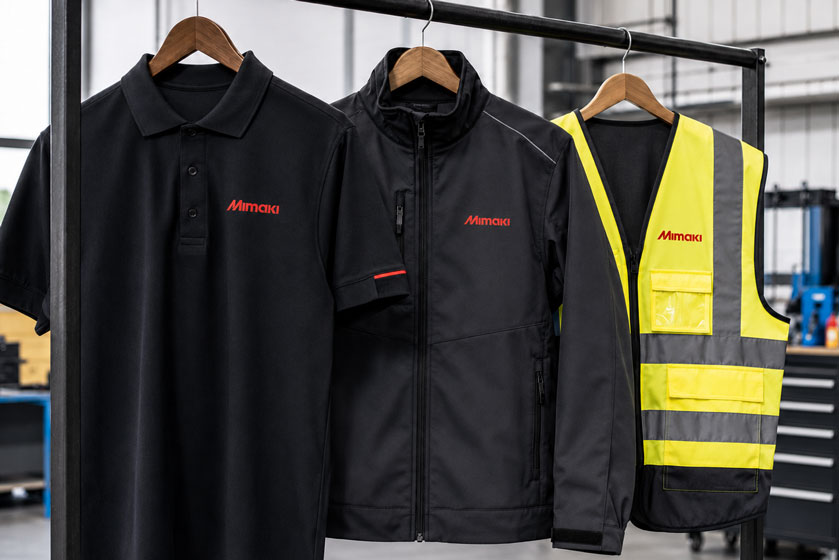
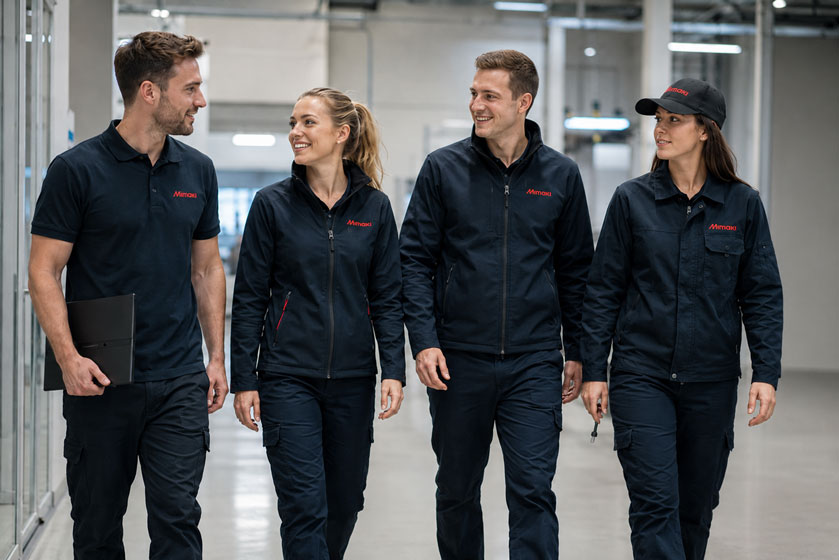
Branded uniforms help create a recognisable company look across polos, t-shirts, jackets, and other staff garments.
This is useful when one organisation needs a uniform range for different teams, roles, or locations, while keeping the overall appearance professional and easy to identify.
For logos and brand colours, consistency across garments is as important as the first-day appearance. A DTF workflow such as the Mimaki TxF Series helps produce vivid, detailed transfers with stable results across cotton, polyester, blended fabrics and selected workwear materials, while supporting durable prints for garments exposed to regular washing and daily use.
Discover our TxF Printer SeriesSafety & high-visibility clothing
High-visibility workwear (Hi-Vis clothing) is used in environments where visibility and safety matter as much as branding. For hi-vis vests, jackets, and other job-specific garments, the logo needs to stay clear while still working with the garment’s practical function.
This makes garment type, logo placement, and the chosen printing approach important when applying branding to safety clothing. Mimaki’s DTF workflow supports vivid colours and stable colour reproduction across different textile types, thanks to compatibility with a broad range of DTF films in the market.
Find out more about DTF workflows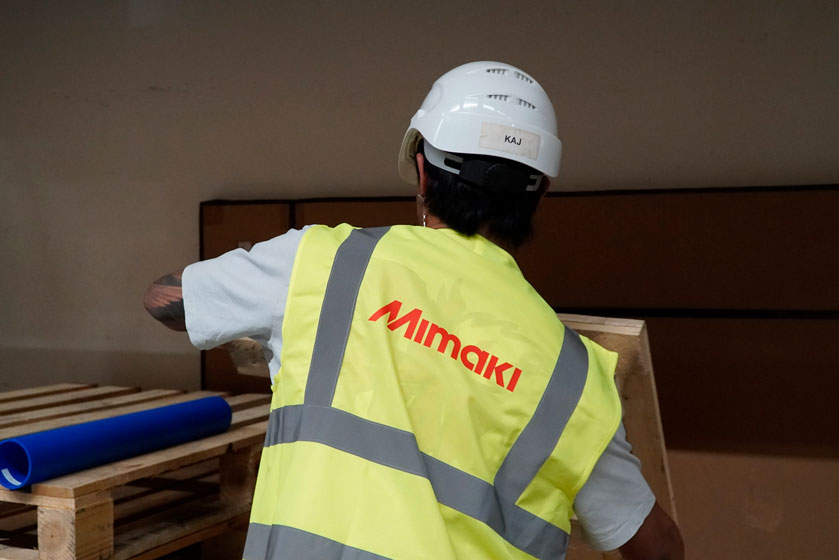
Personalised workwear
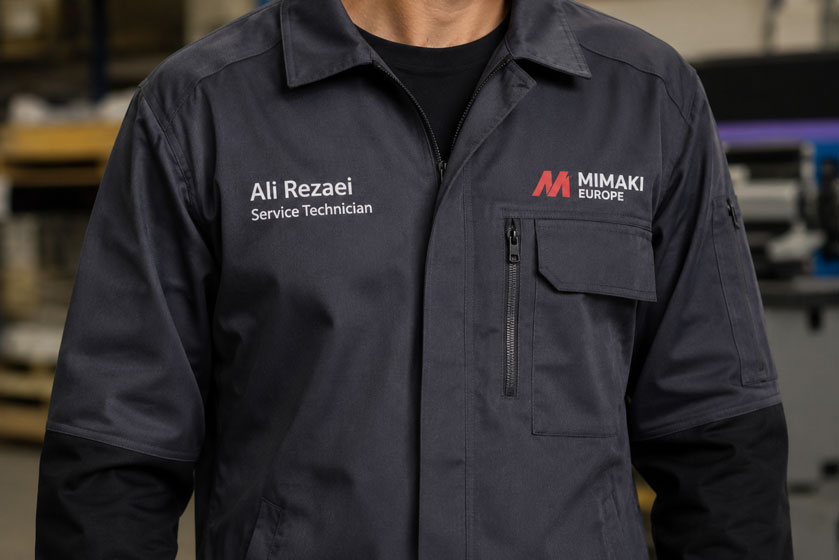
Personalised workwear combines company branding with individual details such as names, job titles, or team information.
This is useful when staff garments need clear identification while still fitting the same overall brand look across short runs, updates, and repeat orders.
In addition, workwear is washed frequently and used in demanding conditions, so wash resistance is important. Our TxF300 Series shows very strong wash resistance performance compared with similar DTF systems, helping to reduce waste, reprints and returned orders.
Compare the TxF300-75Plus and TxF300-1600 printersFind the right Mimaki printer for your custom workwear application
The right Mimaki solution depends on the workflow and the type of branding you want to produce. DTF transfer using the Mimaki TxF Series printers, and more specifically, the TxF300 Series, offer the best workflow solution for printing short-run personalisation of logos and names and repeat orders of ready-made garments. Other workflows can also be relevant for more specific needs, such as HTV / heat-applied graphics and sublimation printing. Explore all Mimaki printers that support this application.
-
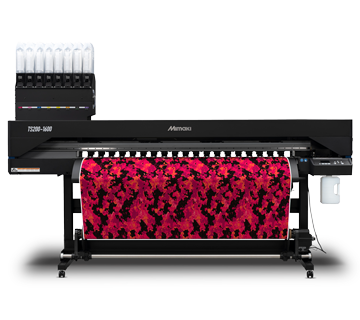
TS200-1600
Affordable entry model with pro-level performance
- Powerful solution for sportswear, fashion and decor
- Orange, violet and flourescent inks for bold and vivid brilliance
- Superior performance with 330 Series technology
- 2-litre ink packs for longer printer runs

-
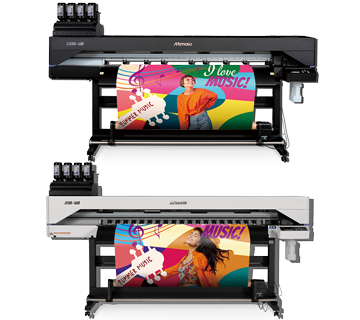
(C)JV200-160B
Eco-solvent advanced print and print & cut
- Superb image quality
- Affordable 1L ink bottles
- Reliable productivity ideal for high demand
- Easy to maintain, easier to operate
-
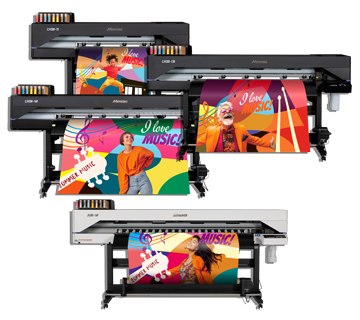
(C)JV200 Series
Eco-friendly print & cut series
- Leverages 330 Series technology for superior performance
- Three print & cut, one print-only for diverse project needs
- Eco-friendly GBL-free SS22 inks
- Easy to maintain, easier to operate
-
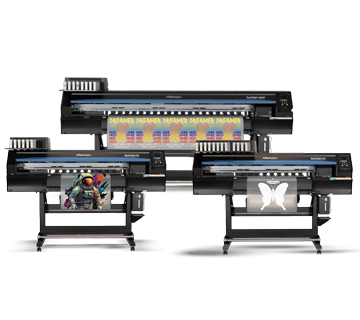
TxF Series
Mimaki’s first Direct-to-Film (DTF) printer
- Highly reliable and stable DTF print workflow
- Degassed ink packs for constant image quality
- White ink circulation to prevent sedimentation
- Combined with Mimaki’s PHT50 pigment ink


Frequently asked questions about custom workwear & logo printing
When printing logos on workwear, you need to look at the garment, the fabric, and the type of branding you want to apply. A simple logo on one standard uniform may need a different approach from an order that includes names, job titles, or branding across several garments.
It is also important to think about logo detail, placement, and how much variation the order includes. Jobs with small changes across garments often need a different setup from orders with one fixed design. Washability matters too, especially when the garments are used often and cleaned regularly.
For branded workwear, colour accuracy also matters, especially when the same logo needs to appear across different garment types and materials.
Embroidery and printing apply branding to garments in different ways.
Embroidery creates the design by stitching thread into the fabric. Businesses often choose embroidered workwear for a more traditional, textured, and stitched appearance.
Workwear printing applies the design to the garment surface. This is often more suitable when the design includes finer detail, multiple colours, gradients, or personalised elements such as names and job titles. It can also be a practical option when the same order includes variations across garments.
Logo printing on workwear can be highly durable, but durability depends on the garment material, how the garment is used, how often it is washed, and the printing method selected.
Workwear is used in demanding conditions and often washed frequently, so a good result is not only about how the print looks at first. What matters is how well the branding holds up over time while maintaining colour, detail and adhesion.
Because materials and garment types behave differently, the most suitable printing method can vary from one workwear application to another. Choosing the right method for the garment and its intended use helps support a durable result and consistent branding across multiple garments.
Modern technologies such as DTF transfer printing can provide durable, detailed graphics with strong wash resistance when produced using a well-controlled workflow. This makes them suitable for many workwear applications where logos, names and branding need to remain clear and professional throughout regular use and repeated washing.
Workwear logo printing can be used on many common garments, including t-shirts, polos, hoodies, sweatshirts, jackets, fleece garments, softshells, uniforms, and selected hi-vis clothing.
Common materials include cotton, polyester, and blended fabrics. Cotton and cotton-rich garments are often used for everyday uniforms and staff clothing. Polyester-based workwear is common in performance polos, hi-vis garments, and some outerwear. Blended fabrics are widely used when both comfort and everyday use matter.
When choosing the right approach, it is important to look at the garment, the fabric, and the type of branding needed.
Small custom workwear orders often include names, job titles, numbers, or small logo changes across the same order. In these cases, printing approaches that handle artwork changes easily are usually more suitable.
DTF, or Direct-to-Film, is often a practical option for this type of work. It prints the design onto a film first and then transfers it to the garment, making it useful for short runs, personalised garments, full-colour logos, detailed graphics, and repeat orders with small changes.
HTV, or heat-transfer vinyl, can also be suitable for simple names, numbers, logos, and special effects such as flock or flex finishes. This approach is useful when designs need to be printed, cut, weeded, and applied to already-made garments with a heat press.
For these jobs, the priority is usually managing variation, speed, durable decoration, and consistent branding across garments and repeat orders.