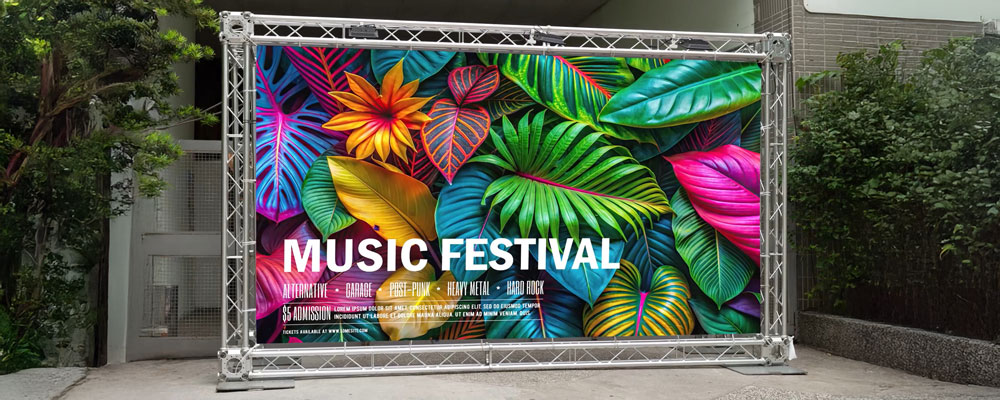
Banner printing
Produce banners for outdoor advertising, events, retail, exhibitions and more.
Choose the right banner printing method
Choose eco-solvent printing for coated PVC, PVC-free, vinyl and mesh banners with liner. It offers good colour durability for indoor and outdoor graphics. This makes it a practical choice for promotional banners, event graphics and general sign production. Check the required drying time before welding, eye-letting or other finishing.
Choose UV-LED printing for coated and uncoated PVC, PVC-free, vinyl, mesh and other flexible banner media when fast finishing matters. UV ink cures during printing, so there is no separate solvent-drying stage. Check media compatibility if the banner will be folded, stretched or handled frequently. Depending on the printer and media, UV can also support white ink and multilayer printing.
Choose dye sublimation for polyester fabric banners and soft signage. You can print onto transfer paper or directly onto compatible polyester, depending on the production setup. Both methods require heat fixation. Sublimation is particularly suitable for fabric banners, exhibition graphics and textile displays.
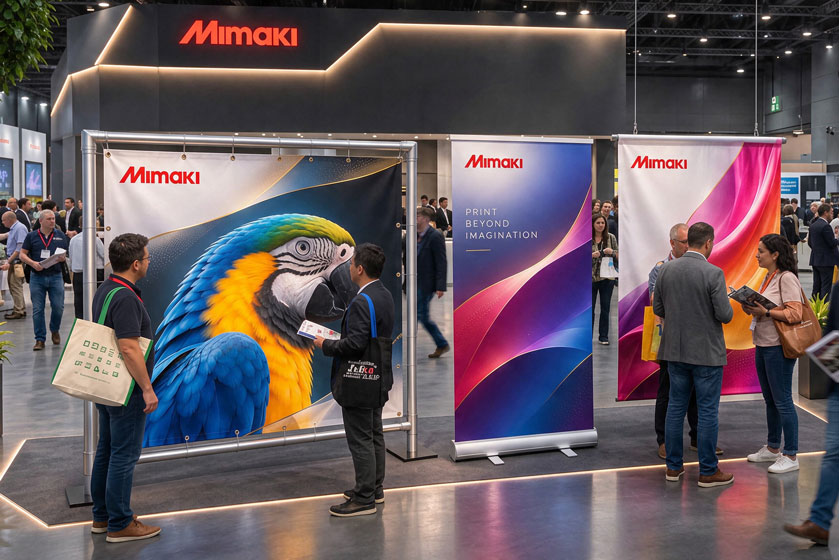
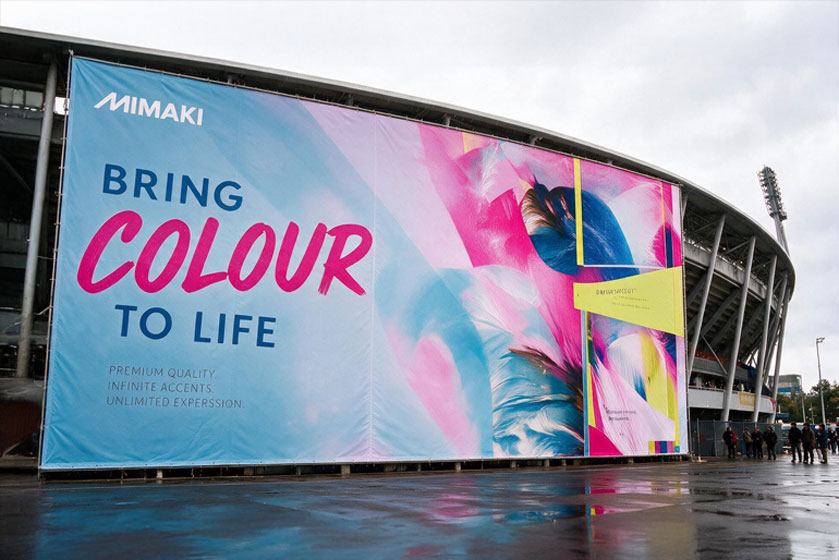
Prepare large banner printing jobs
Large-format banners are often wider than a printer can produce in one piece. In these cases, divide the artwork into separate panels before printing them. They can be joint during finishing. Mimaki RasterLink can split large jobs into tiles, add overlap between these tiles, control the printing order and add tile numbers and cut lines for easier assembly.
Use the same media, colour profile and print settings across all panels. Check adjoining panels for colour differences, as even small variations can become noticeable at the joins. RasterLink also includes a function that can help reduce visible colour differences between tiled sections.
Before printing the complete banner, print a representative cropped section at full size. Check that text, logos and important details remain clear at the intended viewing distance.
Learn more about Mimaki RasterLinkKeep large banner prints consistent
On long banner runs, even small media-feed errors can gradually cause skewing, banding or misalignment as more material passes through the printer.
Load roll media straight and use the take-up settings recommended for the printer and media. If light or dark bands, colour misalignment or skewing appear, check the feed adjustment, media loading and print settings before continuing the job.
Use the correct media profile for the banner material. Materials can differ in thickness, weight and stretch, so settings that work for one media may not give the same result on another.
Most Mimaki printers include DAS (Dot Adjustment System). It automatically adjusts the media feed and drop position. If you do this after a media change, it helps reduce banding and colour misalignment.
Watch banner printing in action!
Discover how a Mimaki UV printer produces vibrant graphics directly onto fabric banners. UV inks cure instantly, so banners are ready for immediate installation. Ideal for retail signage, backdrops and window displays.
Banner types for different applications
Banner printing supports different uses, from outdoor advertising to exhibitions, events and promotional campaigns. Each application has different requirements for material, print setup and installation.
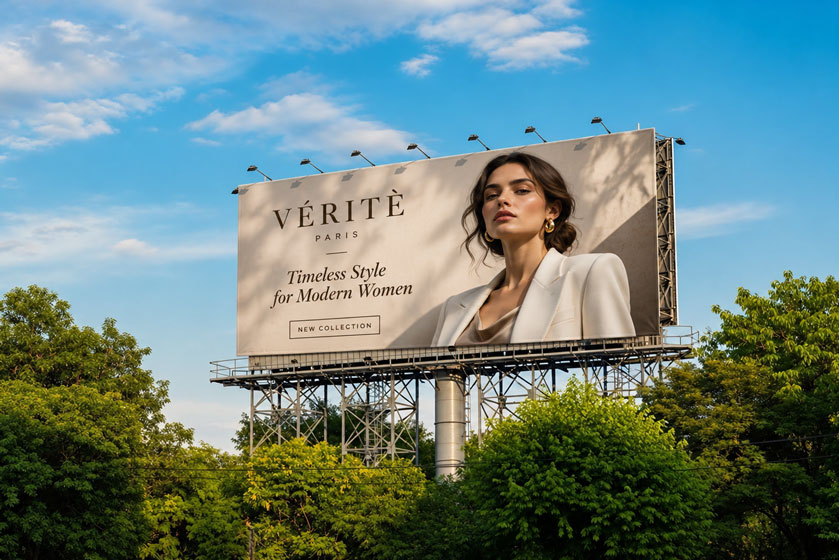
Outdoor banners
PVC, PVC-free and vinyl banners are versatile choices for both indoor and outdoor advertising. Mesh banners are often better suited for large or wind-exposed locations because their open structure allows air to pass through.
When printing on mesh, check whether the material has a backing film (liner). Mesh without a liner requires a printer or specific setup capable of handling ink passing through the open areas. Check the relevant Mimaki product guidelines for compatible media and recommended printer settings.
For long-lasting outdoor graphics, Mimaki offers both solvent and UV roll-to-roll printing solutions. Solvent inks provide proven weather resistance for outdoor signage, while flexible UV inks offer an alternative for a wide range of banner applications.
Reinforced edges, eyelets, strengthened corners and pole pockets can improve installation security and help reduce the risk of tearing or coming loose, particularly in windy environments.
Exhibition and event banners
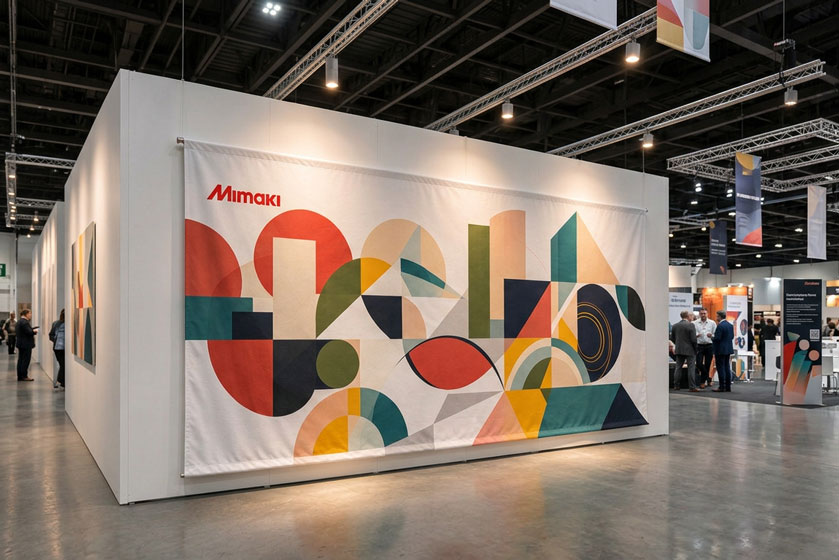
Polyester fabric is a great choice for exhibition and event banners that need to be transported, folded, installed and re-used. Dye sublimation works especially well for polyester fabric banners. It produces durable colours and is a good choice for backdrops, hanging banners and other soft signage.
For larger displays, reducing the number of joined panels can make installation easier and give the finished graphic a cleaner appearance. The Mimaki TS330-3200DS offers a print width of up to 3.2 metres and supports both transfer sublimation as well as direct-to-textile sublimation.
Explore the TS330-3200DS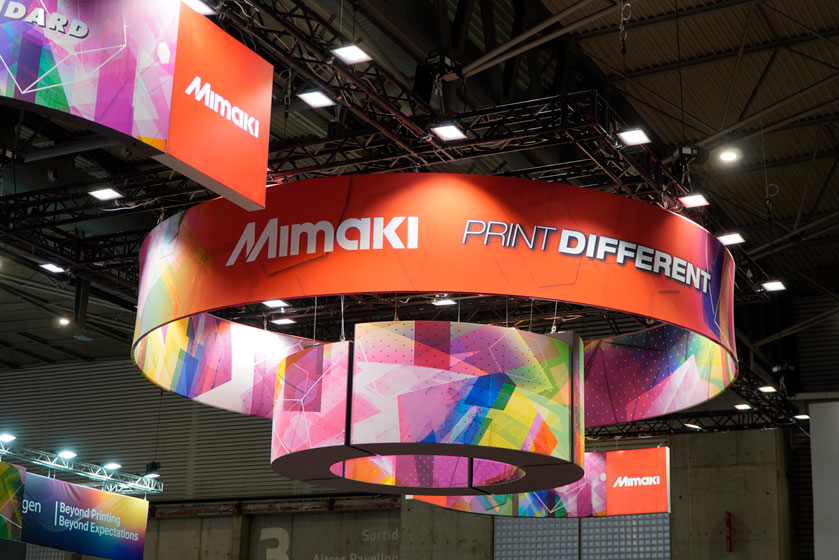
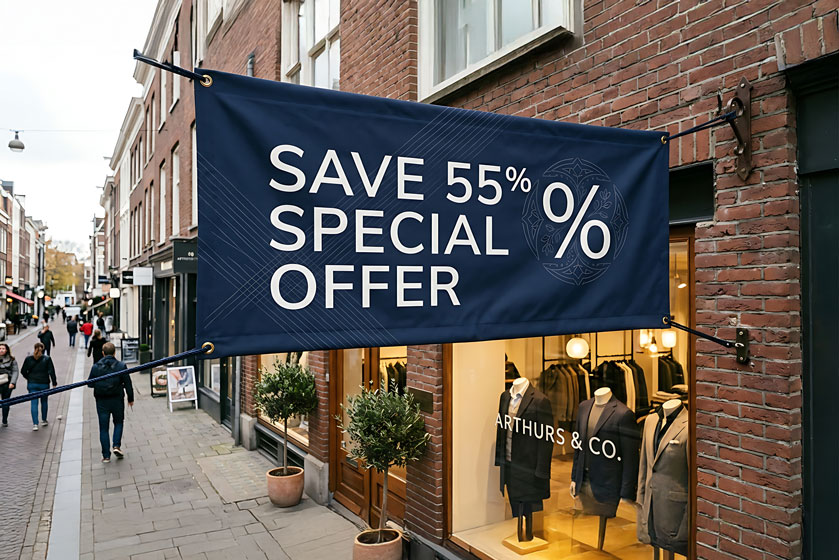
Promotional and advertising banners
Promotional and advertising banners often need fast turnaround, especially for sales campaigns, product launches and time-sensitive events. Print businesses may also need to produce short runs and switch between different designs, sizes or campaign versions without slowing down production.
When turnaround time matters, UV-LED printing can shorten the workflow because the ink cures during printing. The output can move directly to cutting, finishing and installation without a separate drying stage.
What to consider when printing banners
Banner printing helps businesses to expand applications toward promotional graphics, event displays, outdoor advertising and exhibition visuals. The quality and durability of a printed banner depend on how well the media, ink, print settings and installation conditions work together. This becomes even more important for large banners and longer production runs, where small inconsistencies can become more visible.This page explains the information that helps you produce banners efficiently for different applications and environments.
-

UCJV330-160
UV-LED inkjet print & cut
- Superior quality, even at high speeds
- UV-LED for multi-layer effects
- Integrated printer/cutter to expand applications
- Eco-friendly technology
-

(C)JV330-160
CJV330-160 Print & Cut & JV330-160 Print-only
- XY slitter, inline sheet-fed cutting to reduce post-processing
- Media changer which can hold up to three rolls of media
- Higher image sharpness and more uniform density
- Space saving system that can hold three rolls of media
-
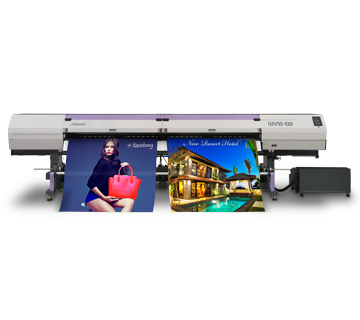
UJV55-320
High performance grand format UV-LED printer
- High density print mode for front/backlit applications
- Inline LED Lightbox for backlit print inspection
- Direct Finishing after printing
- Simultaneous twin-roll print facility
-
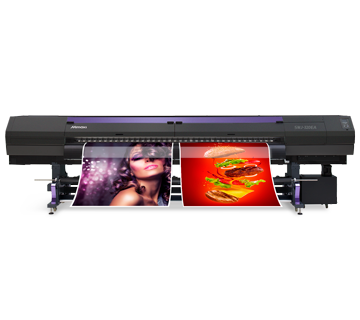
SWJ-320EA
Grand format twin-roll solvent inkjet printer
- High speed printing up to 137sqm/h
- 3.2 metre wide twin-roll printer up to 1524mm simultaneous print
- Max resolution of 1200dpi
- Heavy media rolls up to 100kg
-
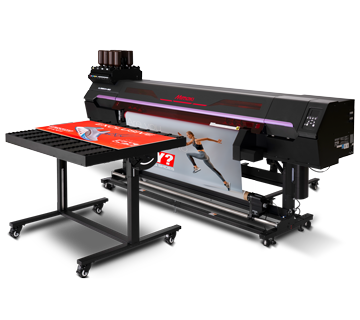
UJ330H-160
Hybrid UV printer for rigid, roll and textured printing
- Handles both roll media and rigid boards
- 2.5D textured prints, multi-layer effects and spot varnish
- Multi-board printing and automatic media alignment
- Stable media transport for the most challenging substrates

-

(C)JV200 Series
Eco-friendly print & cut series
- Leverages 330 Series technology for superior performance
- Three print & cut, one print-only for diverse project needs
- Eco-friendly GBL-free SS22 inks
- Easy to maintain, easier to operate
-
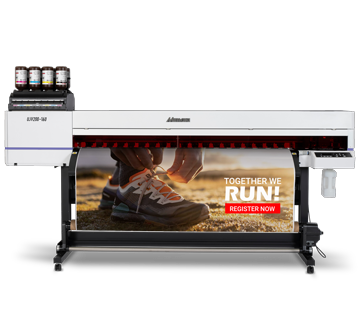
UJV200 Series
High-quality, affordable roll-to-roll UV-LED
- Speeds up to 25m²/h for fast turnaround
- Easy operation with a single printhead and automatic adjustments
- Built-in reliability with nozzle control and ink-saving technology
- Instant drying with our proven UV-LED technology
-

TS330-3200DS
Dual-mode 3.2m dye sublimation printer
- Handles both sublimation paper and direct-to-polyester printing
- Achieves up to 150 sqm/h at an operational speed of 90 sqm/h
- Built-in advanced imaging technology ensures high quality prints
- Easy-to-use ink supply system and simplified maintenance
-

Tx330 Series
Next-gen hybrid printer for vibrant, eco-friendly textiles
- Prints 25% faster at high resolution
- Hybrid printer handles both fabrics and sublimation
- Belt-driven model for stretchy or thick fabrics
- Employs eco-friendly "waterless" technology


Frequently asked questions about banner printing
Print businesses typically use wide-format roll-to-roll printers for banner production. Eco-solvent and UV-LED printers work well with compatible PVC, vinyl and mesh media, while dye-sublimation printers suit polyester fabric banners. Choose the print technology based on the media, required print width, production volume and how quickly the print needs to move to finishing.
PVC banner, PVC-free banner and scrim banner are the most common choices for general outdoor banners because they combine printability, flexibility and weather resistance. It is best to use mesh for large banners which are exposed or placed in windy locations. Because of its open structure, it allows air to pass through and reduce wind pressure on the banner. The best choice of banner also depends on the size, expected exposure and installation method.
PVC banners are commonly printed on wide-format eco-solvent or UV-LED printers.
Eco-solvent inks offer good outdoor durability. Use the correct media profile and follow the recommended drying or outgassing time before finishing. If the print stays tacky or dries unevenly, the profile or ink load may also need adjustment.
UV-LED inks cure during printing, so the banner can move more quickly to cutting or other finishing steps. Always use media that is compatible with the selected printer and ink system.
Technically, there is no difference. In banner printing, the terms PVC banner and vinyl banner often describe the same type of material. Many traditional vinyl banners use a polyester scrim for strength with a printable PVC coating. However, the construction, weight and coating can vary between products, and PVC-free alternatives are also available. Check the media specification when the exact material composition matters.
There is no single lifespan for every outdoor banner. Durability depends on the media, ink, sunlight, weather exposure, wind load, finishing and installation. Poor tension or too few fixing points can shorten the life of a banner even when the material and ink are suitable for outdoor use. For long-term installations, use a media and ink combination with documented outdoor-performance rather than relying on a general lifespan estimate.


